Successful product development for security test software
Maximize efficiency and safety at the vehicle test site with advanced technologies
A challenge in managing and monitoring security tests
Humanetics faced the challenge of increasing safety at a busy vehicle test site and planning parallel tests more reliably. The growing number of complex ADAS and safety scenarios was putting a strain on resources, as multiple teams were using the same areas at the same time, leading to frequent overlaps.
To minimize risks, precise real-time recording of all relevant test data was required—from vehicle positions and active trajectories to infrastructure data such as rain systems and signals. Centralized coordination of resource utilization was crucial to identify bottlenecks early on and ensure safety. Centigrade provided support with UI/UX, research, and front-end development.
Client:
Humanetics
Automotive and Mobility
Services:
Project Management
UX Design
UX Research
UI Design
Software Engineering
Prototyping
Our collaboration led to the development of a high-performance software platform that revolutionizes the monitoring of safety tests on test tracks.

Results of the collaboration
In close collaboration between Humanetics and Centigrade, early MVPs, structured user research, consistent design, and several interactive prototypes resulted in concrete solutions that make operations on the test site significantly more predictable and safer. Building on modern web technologies such as Angular and three.js, a system was created that maps vehicle movements, infrastructure conditions, and land use in real time.
The software provides a clear overview of all test areas, resources, and movement profiles. This allows conflicts to be identified at an early stage, test runs to be planned more precisely, and safety-critical situations to be avoided more reliably.
Results of the collaboration
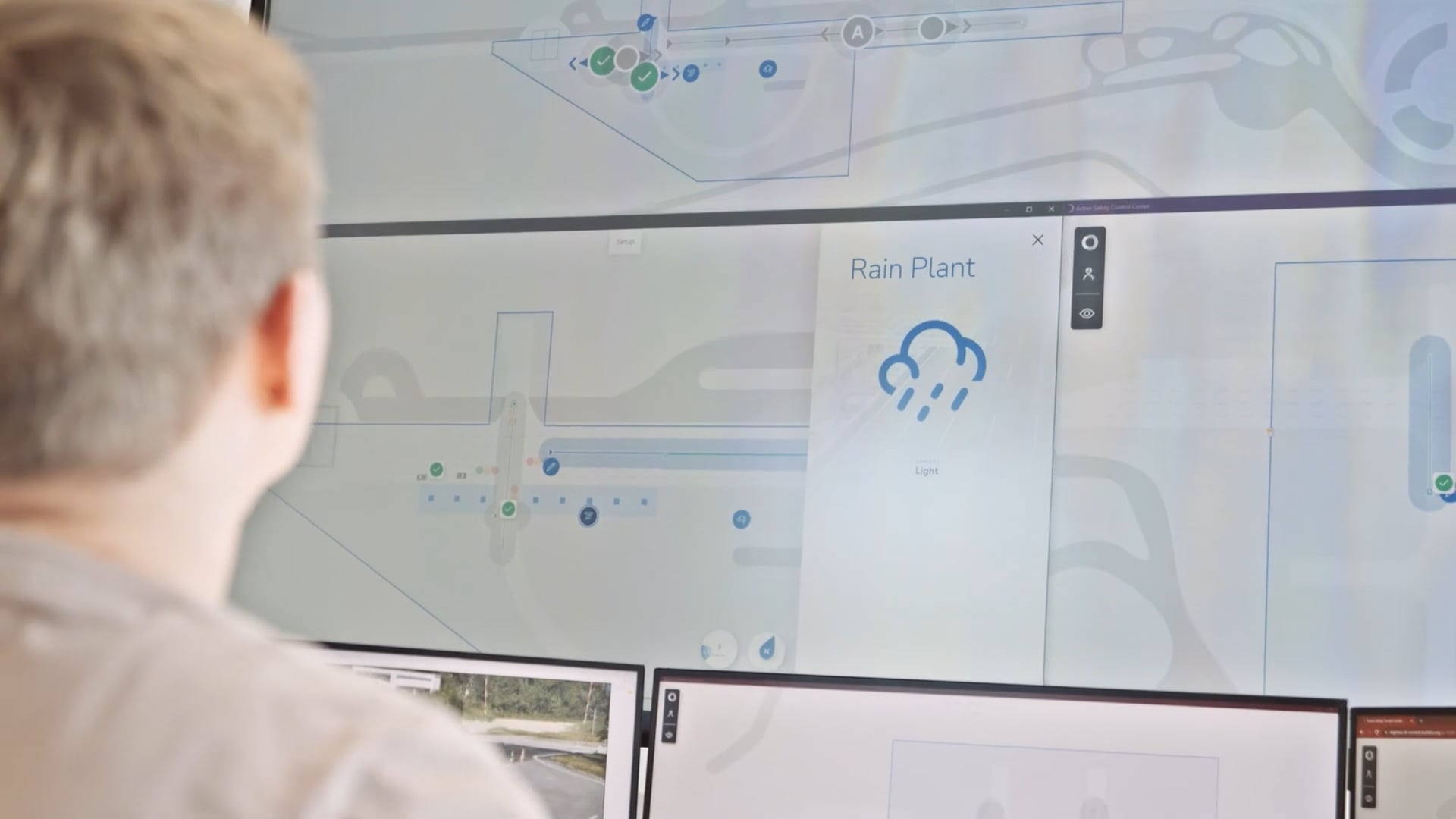
In close collaboration between Humanetics and Centigrade, early MVPs, structured user research, consistent design, and several interactive prototypes resulted in concrete solutions that make operations on the test site significantly more predictable and safer. Building on modern web technologies such as Angular and three.js, a system was created that maps vehicle movements, infrastructure conditions, and land use in real time.
The software provides a clear overview of all test areas, resources, and movement profiles. This allows conflicts to be identified at an early stage, test runs to be planned more precisely, and safety-critical situations to be avoided more reliably.
Intuitive visual capture
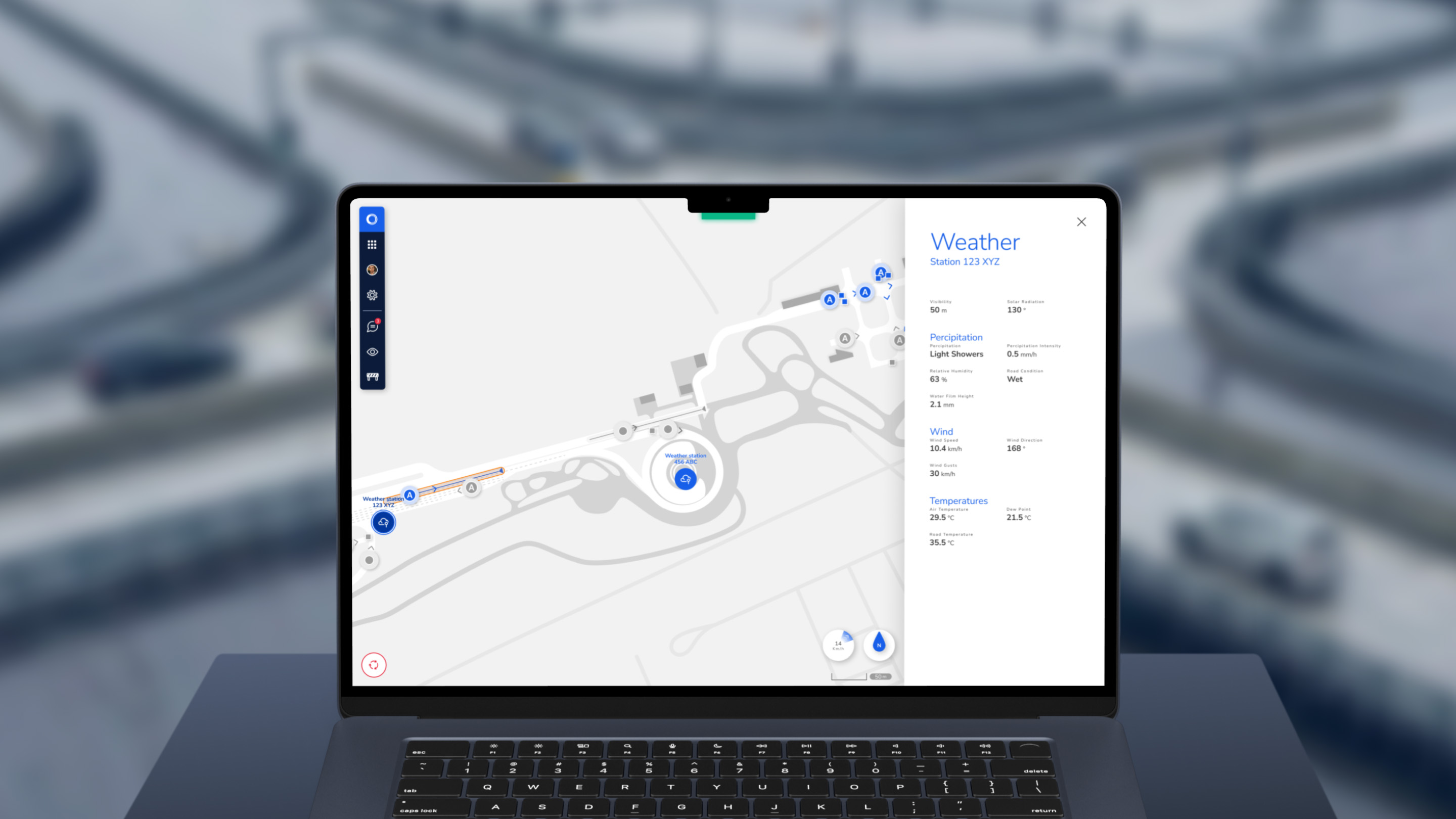
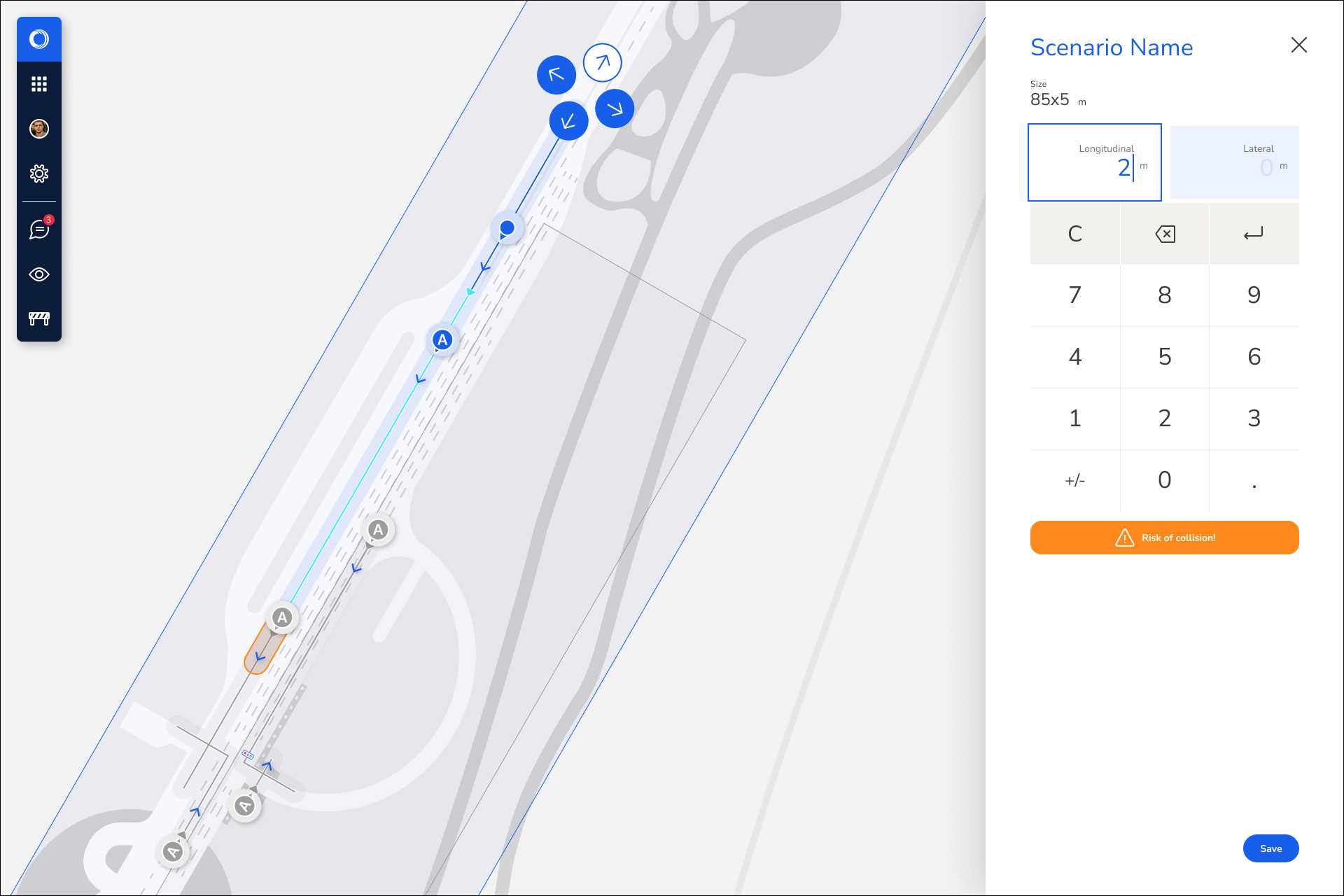

The result of this collaboration is an interface that displays all safety-related information in real time. The application shows the current positions of networked vehicles and devices, visualizes planned and current trajectories, and makes occupied or free test areas immediately recognizable. In addition, status information on infrastructure systems is integrated, giving test engineers a precise overview at all times.
This consistent transparency facilitates coordination and ensures that potential conflicts are identified at an early stage. The resulting clarity contributes significantly to safety and efficiency across the entire test site.
Robust technology integration
The combination of Angular and three.js enabled an architecture that remains performant in real time while also ensuring high stability. This foundation is particularly important because vehicle data, infrastructure information, and external systems must be continuously synchronized with each other.
The software integrates seamlessly into existing system landscapes, including ADAS technology in accordance with ISO 22133 and other management systems already in use at the test site. This has resulted in a solution that can be flexibly expanded and is sustainable in the long term—even if new test requirements or technical systems are added.

Efficient Component Library
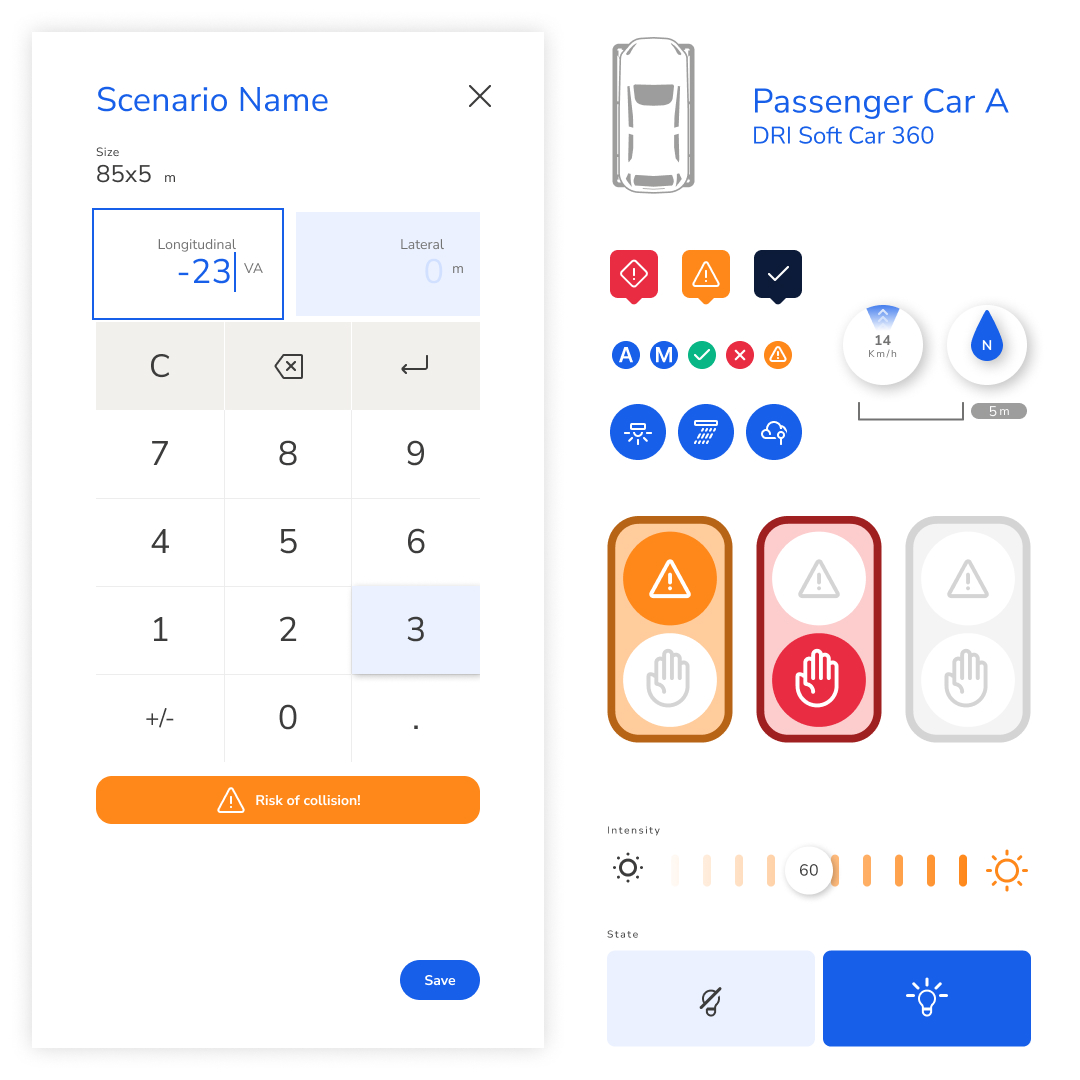
Another key component of the implementation was the development of a comprehensive component library. This ensures a consistent design across all modules and facilitates the ongoing development of the platform.
The reusable elements not only accelerate future functional enhancements, but also enable a consistent user experience across all areas of the application. This creates a robust foundation for scaling and long-term maintenance, allowing the platform to continue growing without losing clarity or quality.
Mehr dazu


Technologies
Clients Who Trust Us


It all starts with a good conversation.
Let's talk about the possibilities for your digital product development. We look forward to hearing from you.